How to Style Open Kitchen Shelves for a Chic and Functional Look
Styling open kitchen shelves successfully means combining aesthetics with usability by carefully selecting what you display and how you arrange it. Start by choosing a cohesive color palette and mixing practical items like dishes and glassware with decorative accents to create an inviting look.
Open kitchen shelves offer a unique opportunity to personalize your space while keeping everyday essentials within reach. This style highlights your personality and can make even a small kitchen feel larger and airier if done thoughtfully.
In this article, we’ll explore practical methods to style open kitchen shelves that balance function and beauty, including selecting the right materials, organizing strategies, decor ideas, and maintenance tips to keep your shelves looking attractive day after day.
Choosing the Right Items for Open Kitchen Shelves
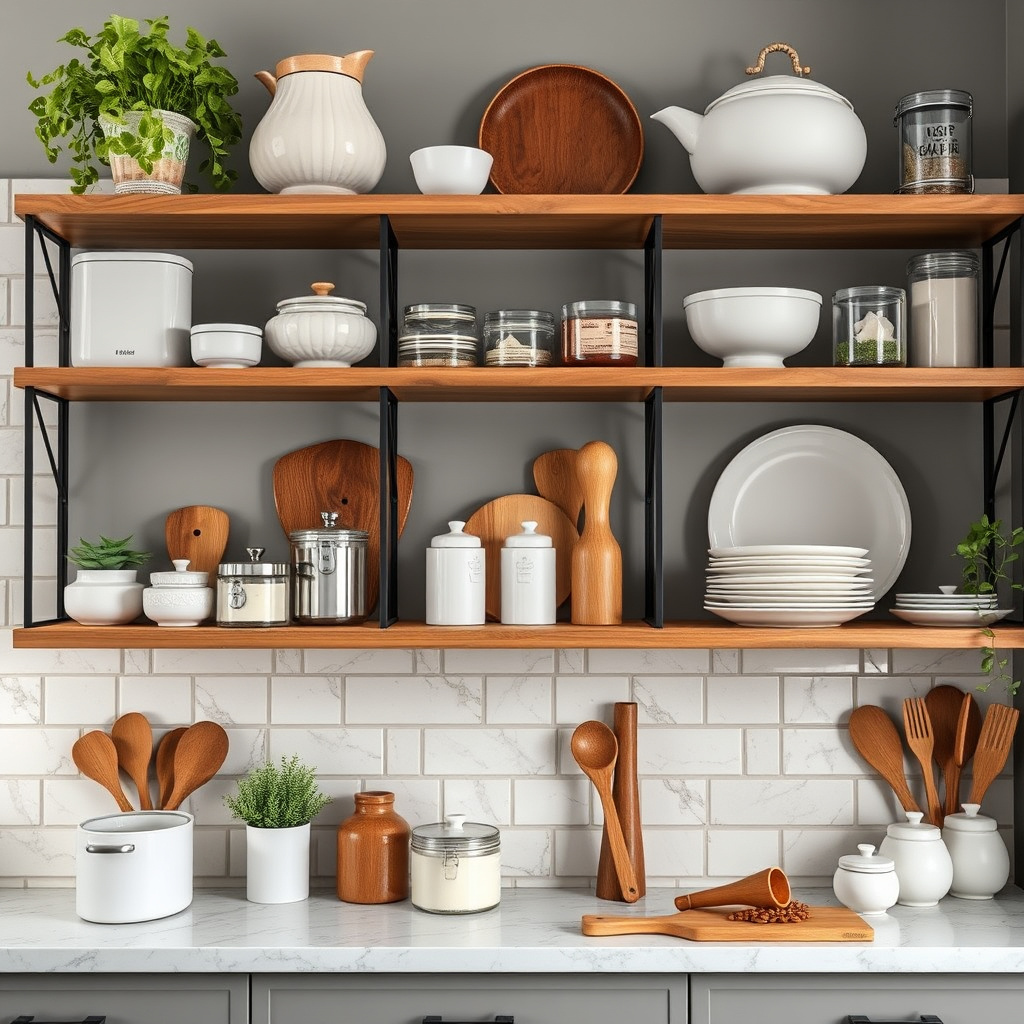
Balancing Function and Decoration
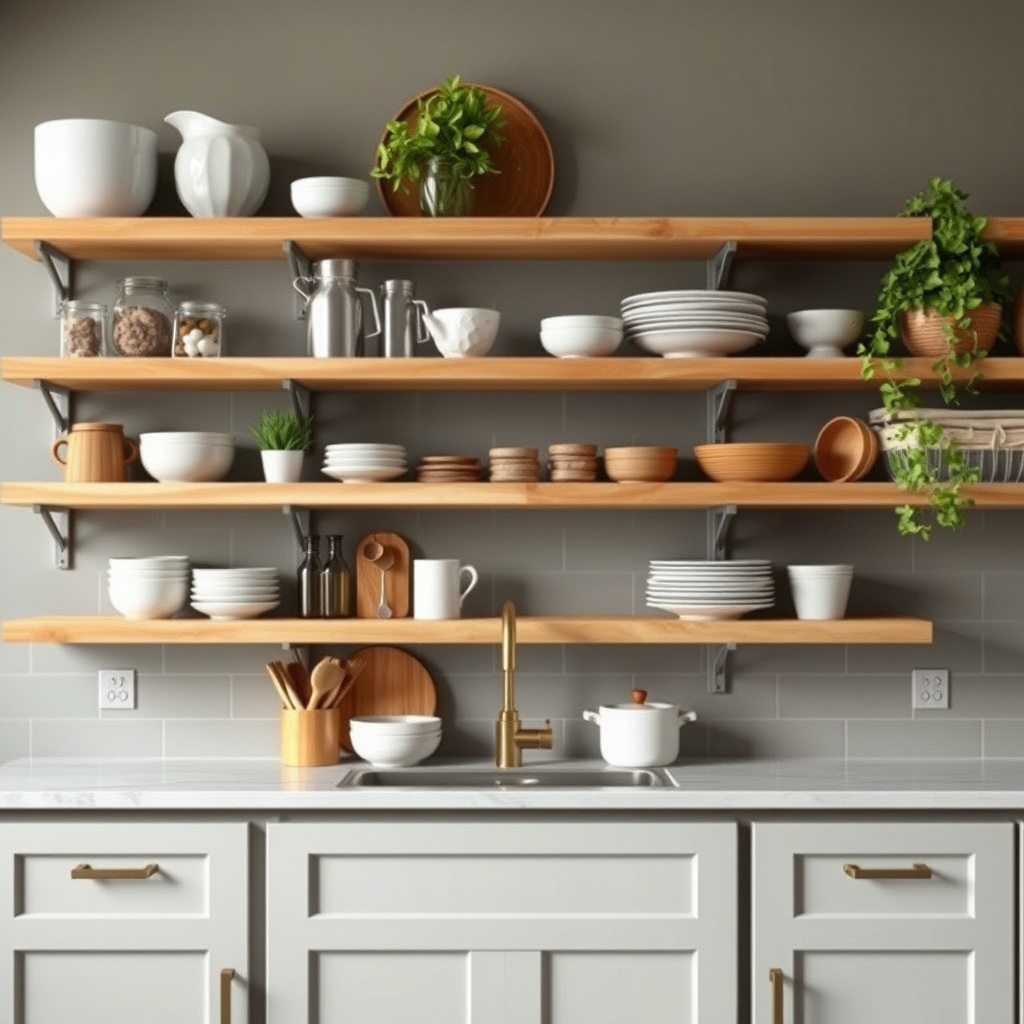
When styling open kitchen shelves, it’s important to mix items you use regularly with pieces that bring personality. Combine everyday plates, bowls, and glassware with decorative jars, vases, or cookbooks to create layers of visual interest.
This blend keeps the space practical yet inviting, preventing shelves from feeling cluttered or solely utilitarian. Select pieces that coordinate in color or material to maintain harmony.
- Frequently used dishes in matching or neutral tones
- Decorative objects like plants or ceramic jars
- Cookbooks with colorful spines
Limit Clutter for a Clean Look
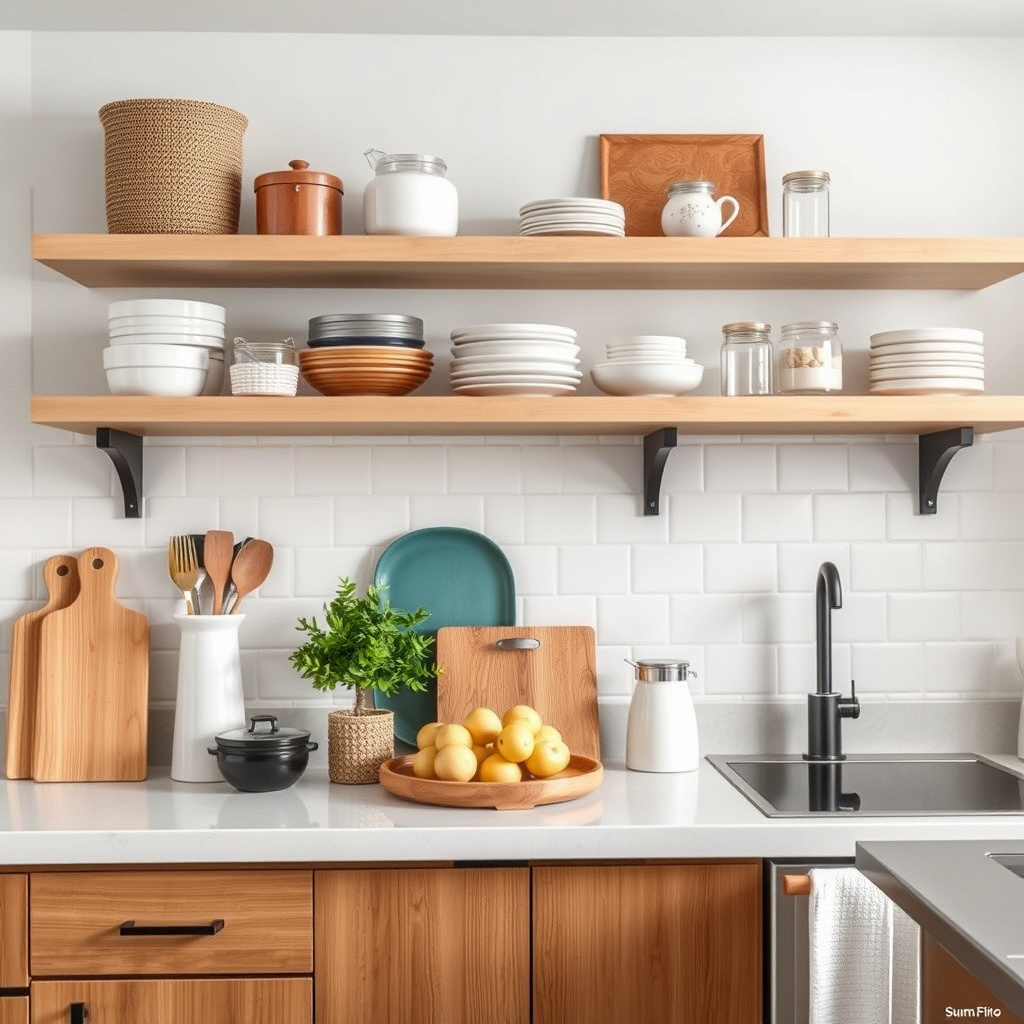
Open shelves can look messy if overloaded, so keep the quantity of items moderate. Leave some spaces open to give your eyes a rest and highlight the key pieces you want to showcase.
Use baskets or containers to store smaller or less visually appealing items, which can add texture and keep the shelves organized. Sticking to a color theme also helps unify the overall appearance.
- Use containers with natural materials like wicker
- Group items by type or color
- Remove rarely used items from view
Arranging Items on Open Kitchen Shelves
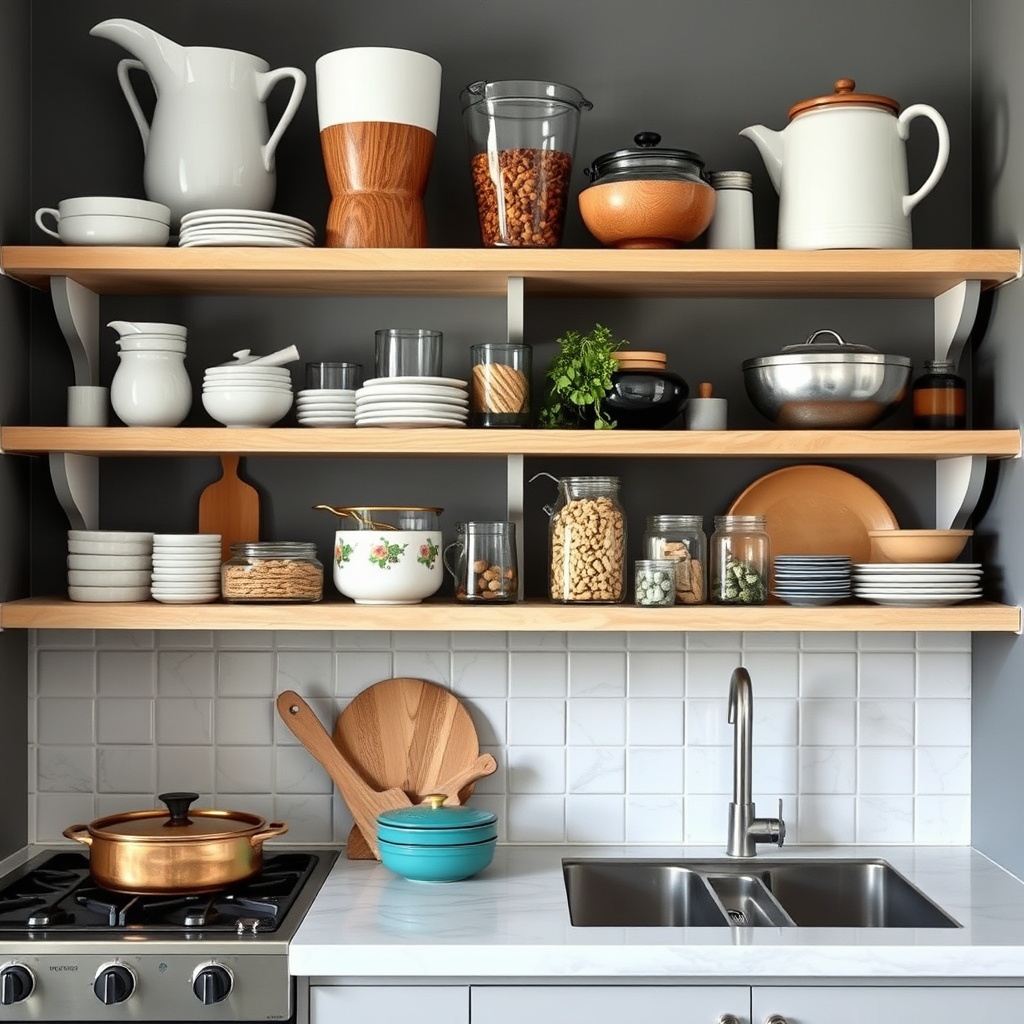
Varying Heights and Textures
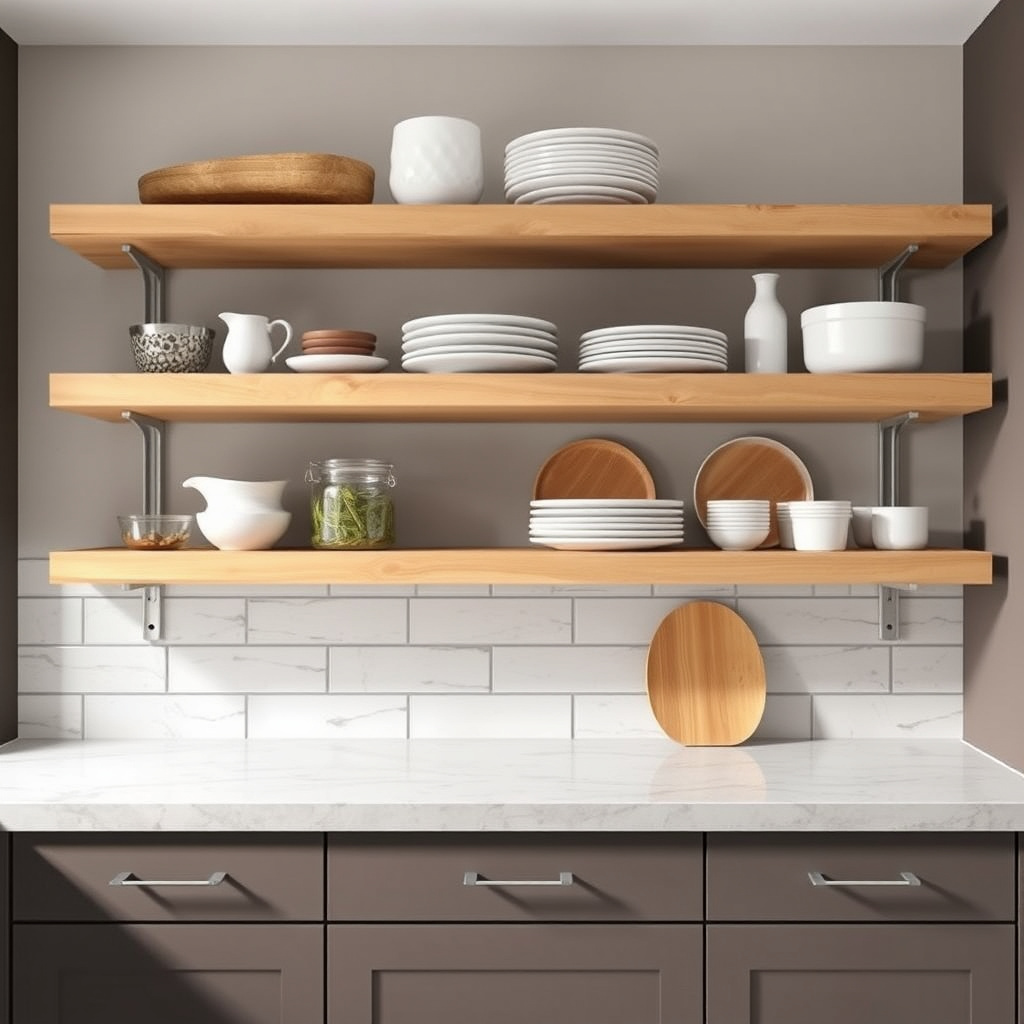
Spacing items of different heights creates an engaging visual rhythm. For example, place taller bottles next to short bowls and layer a few small plants in between to soften the arrangement.
Mix smooth ceramics with woven baskets or glassware to add tactile contrast. This variation heightens warmth and avoids a monotonous look.
- Alternate tall and short objects
- Use natural elements like plants for softness
- Mix materials such as wood, glass, and ceramic
Creating Symmetry and Groupings
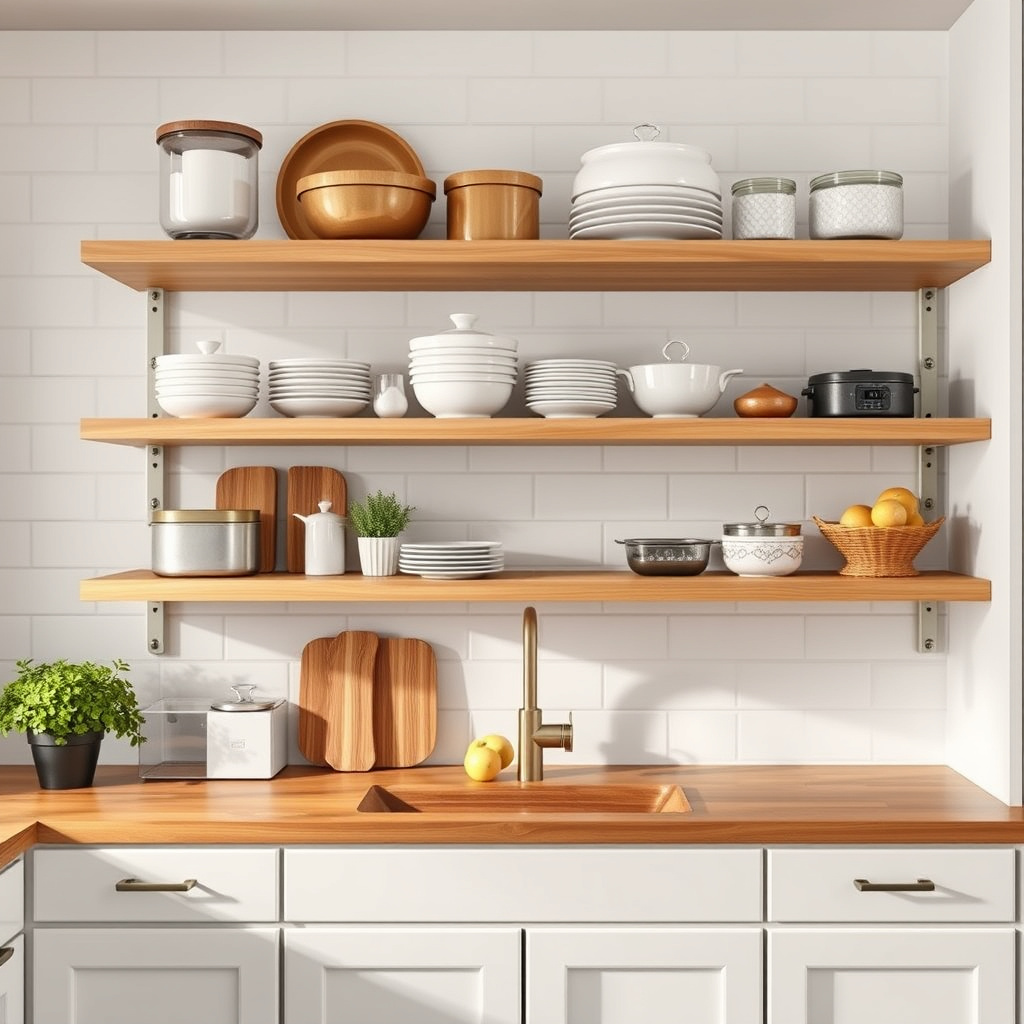
Grouping items into sets of three or five keeps the display appealing and cohesive. Symmetrical layouts can work well for more traditional kitchens, while asymmetry provides a relaxed feel.
Arrange items in clusters rather than evenly spaced to guide the eye smoothly along your shelves without the look becoming too rigid or sparse.
- Create clusters of similar-sized items
- Use odd numbers for groupings
- Balance both sides of the shelf visually
Incorporating Decorative Elements
Adding Greenery and Artwork
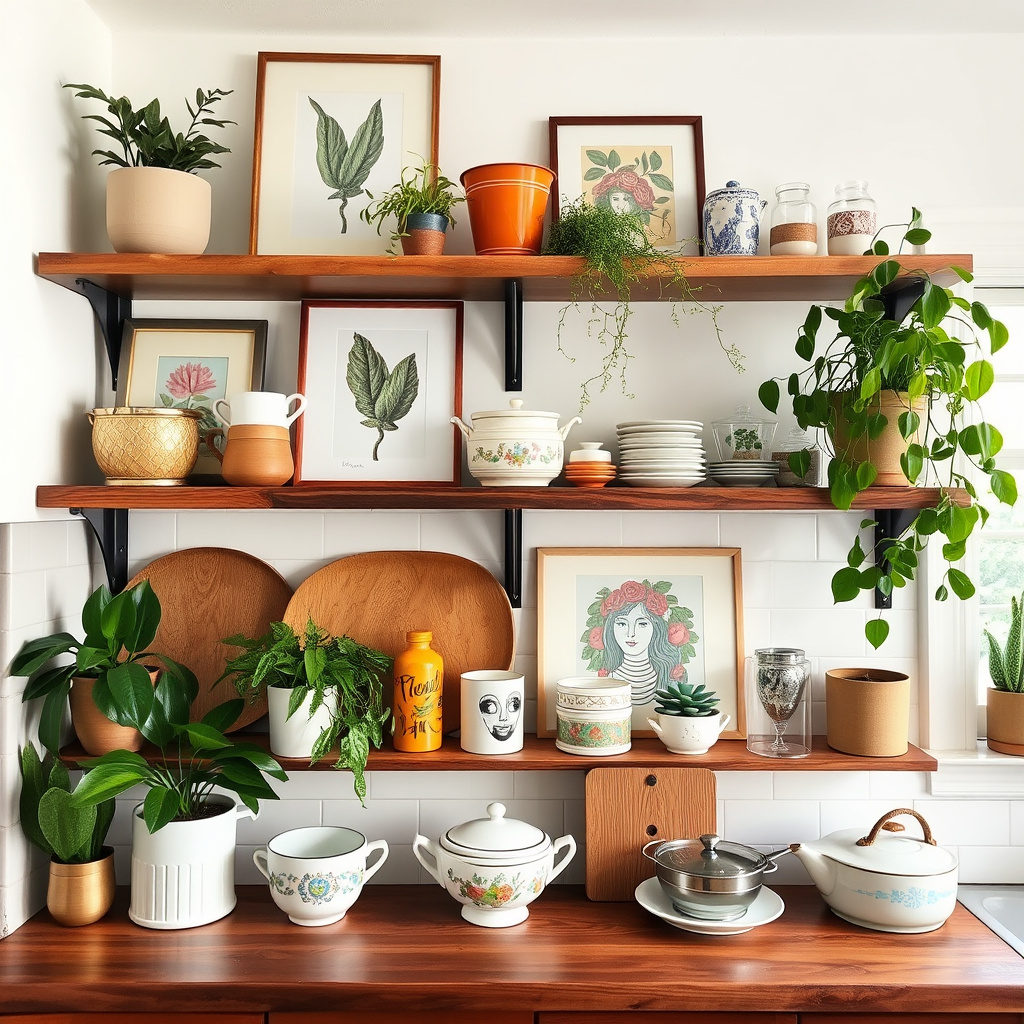
Small potted plants or succulents bring freshness and life to open kitchen shelves, breaking up hard surfaces with their vibrant colors. Consider hanging a small framed print or leaning artwork behind items for added depth.
These touches infuse personality and create a warm, inviting kitchen atmosphere that goes beyond just storage.
- Choose low-maintenance plants suited for indoor light
- Use wall art that complements shelf colors
- Rotate decorations seasonally for variation
For more on this, see our related guide: How Deep Are Standard Kitchen Cabinets? A Detailed Guide to Cabinet Dimensions.
Incorporating Unique Kitchenware
Display unique or vintage kitchen items such as handmade pottery, antique bottles, or colorful mugs to showcase character. These pieces often become conversation starters and enhance the overall aesthetic appeal.
Rotate featured items occasionally to keep the shelves feeling fresh and tailored to your style.
- Feature handmade ceramic bowls
- Showcase retro glassware
- Use interesting utensils or tools as decor
Maintaining Open Kitchen Shelves
Routine Cleaning and Dusting
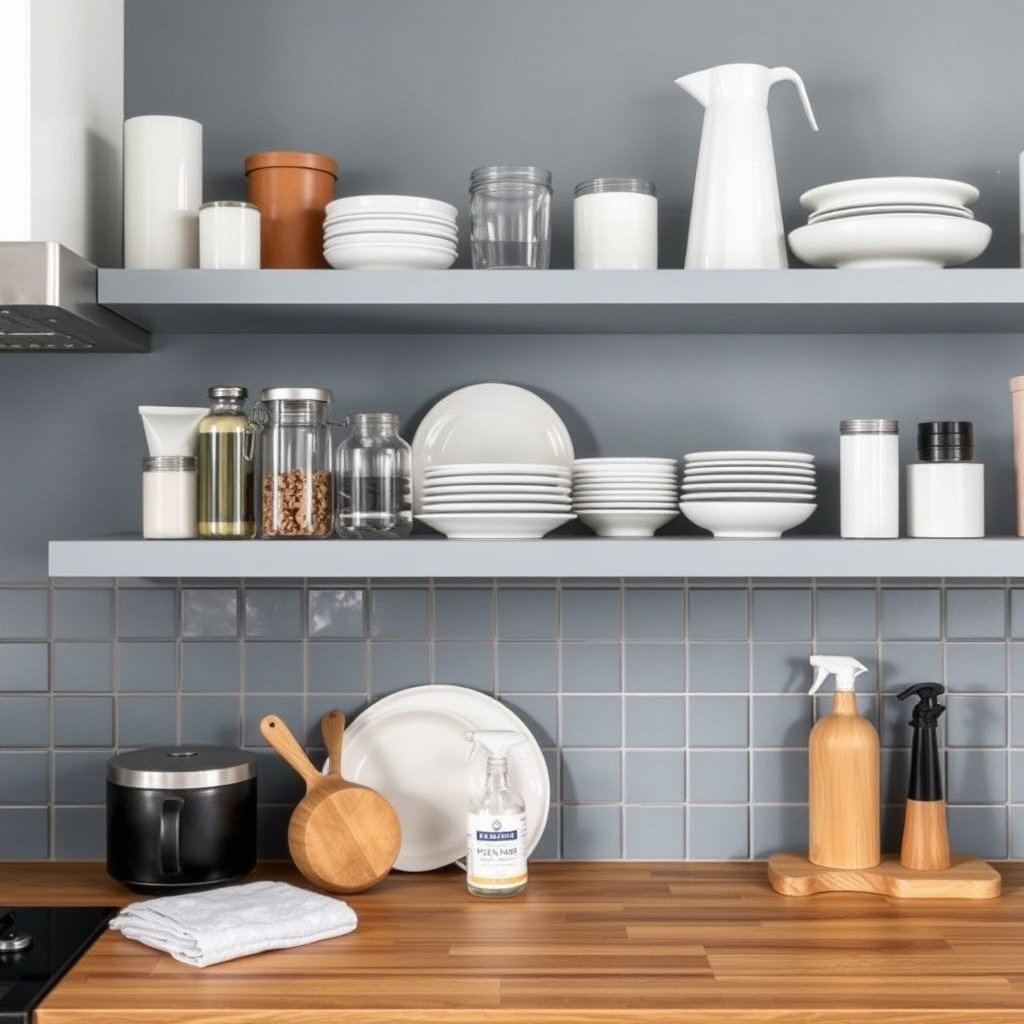
Open shelves attract dust and kitchen grease, so wiping them regularly is necessary. Use a microfiber cloth and mild cleaner to keep surfaces spotless without damaging delicate displayed items.
Regular cleaning preserves both the visual appeal and hygiene of your open shelving.
- Dust shelves weekly
- Clean glassware and ceramics as needed
- Avoid harsh chemicals near food items
Rearranging for Freshness
Every few months, reassess your shelf styling and swap out or rearrange items to prevent the area from looking stale. Seasonal changes or holidays can also inspire new decor themes.
This practice keeps your open kitchen shelves engaging and aligned with your evolving taste.
- Rotate decor seasonally
- Donate or store unused items
- Experiment with new layouts
Materials and Designs for Open Kitchen Shelves
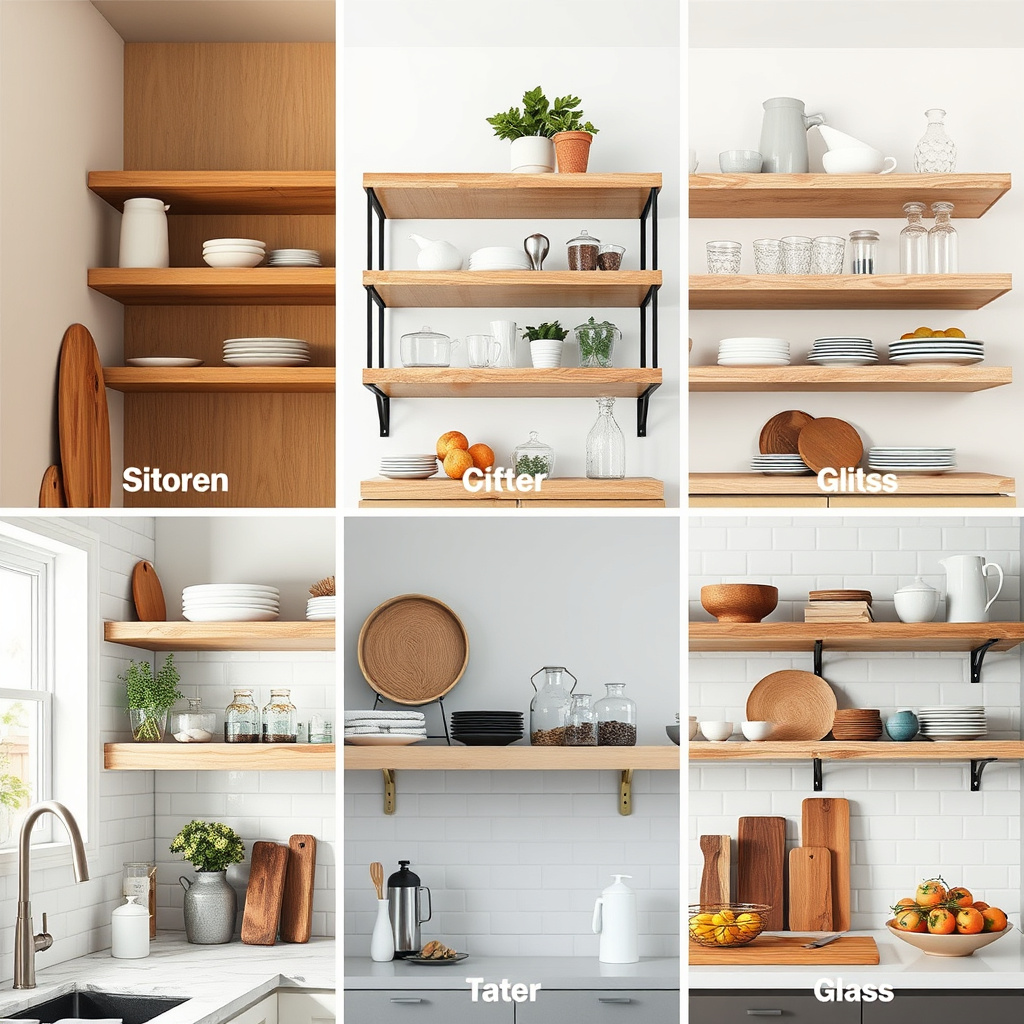
Wooden Shelves for Warmth
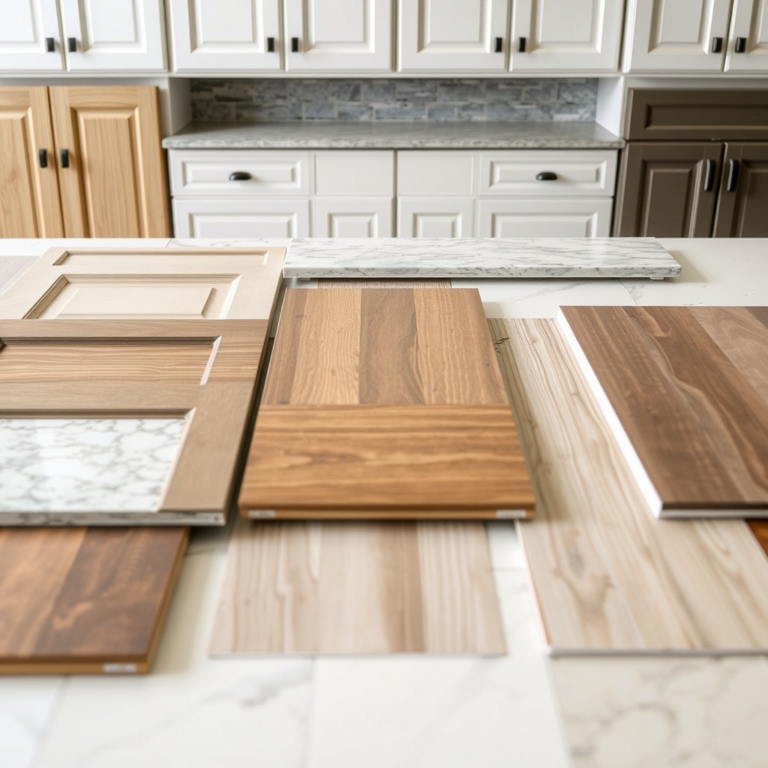
Wood open shelves bring organic warmth and fit well in rustic, farmhouse, or traditional kitchens. Different wood tones—from light maple to dark walnut—can influence the room's mood and complement cabinetry.
They are sturdy and can be refinished or stained to update the look over time.
- Solid wood offers durability
- Can be stained or painted
- Pairs well with neutral-colored items
For more on this, see our related guide: How to Make a Small Kitchen Look Bigger: Practical Design Tips.
Metal and Glass for Modern Appeal
Metal brackets combined with glass shelves create a sleek and contemporary look suited for modern kitchens. They reflect light well and keep the space feeling open and airy.
Glass shelves require careful cleaning but showcase displayed items clearly and add brightness.
- Choose tempered glass for safety
- Metal frames can be black, brass, or stainless steel
- Ideal for minimalist designs
Styling Open Kitchen Shelves with the Main Keyword
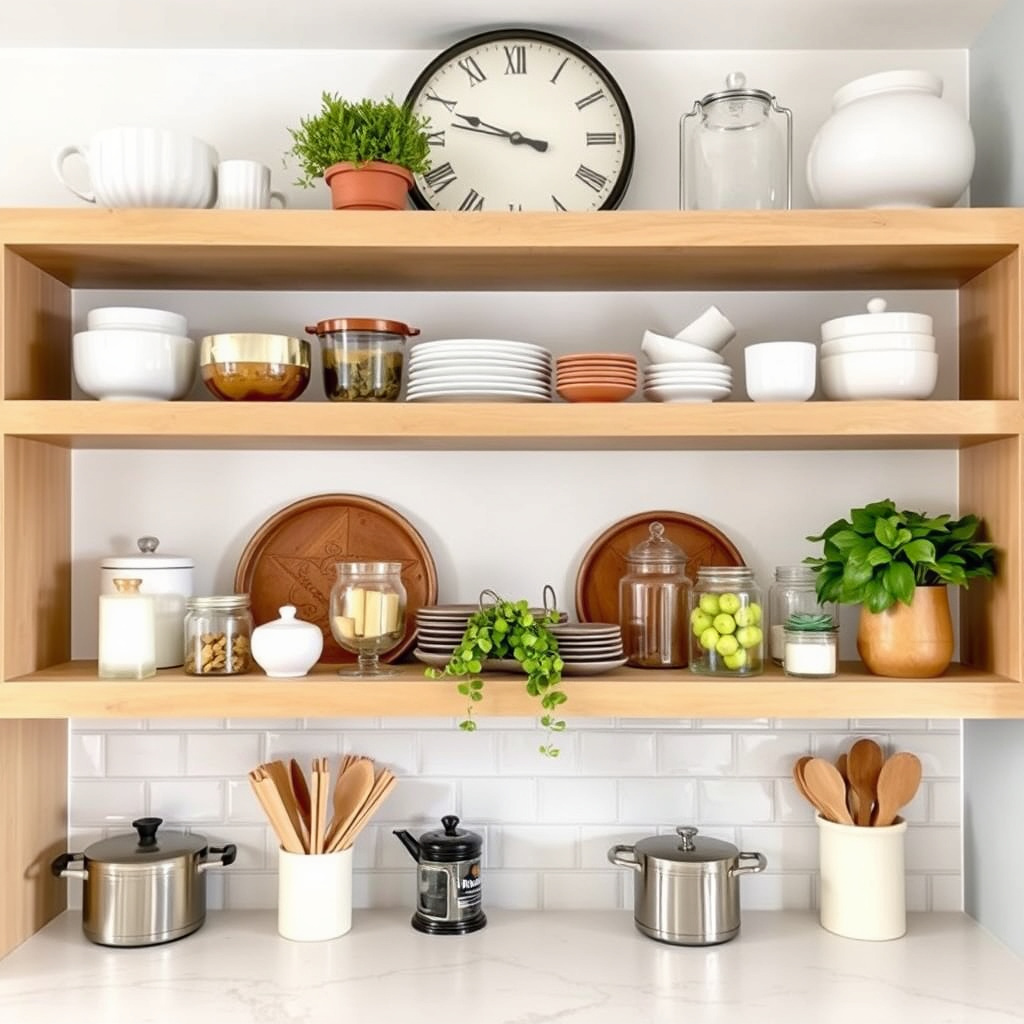
Using Color Themes Effectively
How to style open kitchen shelves includes using a consistent color palette to unify diverse items. Choose two to three main colors and coordinate dishes, containers, and decor to these hues for harmony.
This method prevents the shelves from feeling chaotic and highlights your style intentionally.
For a historical perspective and additional design ideas, see open kitchen shelving on Wikipedia. open kitchen shelving on Wikipedia.
Incorporating the Secondary Keyword Naturally
Decorating open kitchen shelves benefits from thoughtful planning of item function and appearance. Emphasizing groupings of similar shapes or materials can enhance the visual connection between objects, making the shelves both useful and beautiful.
Using baskets or decorative boxes can cleverly hide clutter while adding texture.
Open Kitchen Shelves Material Comparison
Explore the pros and cons of popular materials used for open kitchen shelves to find what suits your style and needs best.
| Material | Durability | Maintenance | Style Suitability | Cost |
|---|---|---|---|---|
| Solid Wood | High | Medium – requires polishing | Rustic, Traditional, Farmhouse | Medium |
| Plywood with Veneer | Medium | Low – easy to clean | Modern, Transitional | Low |
| Metal Frames with Glass | High | High – prone to fingerprints and smudges | Contemporary, Minimalist | High |
| Reclaimed Wood | Medium | Medium – may need sealing | Eco-friendly, Industrial | Variable |
| Laminate Shelves | Low | Low – easy to clean but chips over time | Budget-friendly, Casual | Low |
Frequently Asked Questions
Can I use open shelves in a small kitchen without making it look cluttered?
Yes, by limiting the number of items and maintaining a cohesive color scheme, open shelves can create an airy feel in small kitchens without overwhelming the space.
What types of items should not go on open kitchen shelves?
Avoid storing heavy or greasy items, perishable food, or very fragile pieces that may be difficult to access or keep clean on open shelves.
How often should I clean and rearrange my open kitchen shelves?
Dust and wipe shelves weekly, with a more thorough cleaning and rearrangement every few months to keep the display fresh and organized.
Are open kitchen shelves suitable for families with young children?
They can be, but it’s wise to place breakable or hazardous items on higher shelves out of children's reach and focus on durable, child-safe décor.
What lighting works best to highlight open shelves?
Under-shelf LED strips or small spotlights emphasize displayed items effectively and add warmth, enhancing the shelf’s visual appeal.
Key Takeaways
- Mix practical and decorative items for balanced open kitchen shelves.
- Vary heights and textures to create visual interest and warmth.
- Use limited, well-chosen pieces to avoid clutter.
- Regular cleaning and rotating décor keep shelves fresh and appealing.
Conclusion
How to style open kitchen shelves involves thoughtful selection and arrangement of items that combine function with style. Prioritizing a cohesive color palette and varied textures will enhance your kitchen’s atmosphere without sacrificing convenience. Being mindful about how many pieces you display ensures the space remains open and inviting rather than crowded.
If your kitchen favors rustic charm, wooden shelves paired with simple ceramics and greenery create a cozy feel. For minimalist or modern kitchens, metal and glass shelves showcasing streamlined dishware and a few decorative accents deliver elegance. Decorating open kitchen shelves is about reflecting your personality, so don't hesitate to feature meaningful or vintage items that make the space uniquely yours.
Begin by clearing your current shelves and choosing an organizing theme—whether color-based, material-focused, or grouped by function. Gradually add elements, stepping back often to assess balance and space. This incremental styling approach will help you develop an open kitchen shelf design that’s visually pleasing, highly practical, and something you’ll enjoy seeing and using every day.