How to Accessorize a Kitchen Counter for Style and Functionality
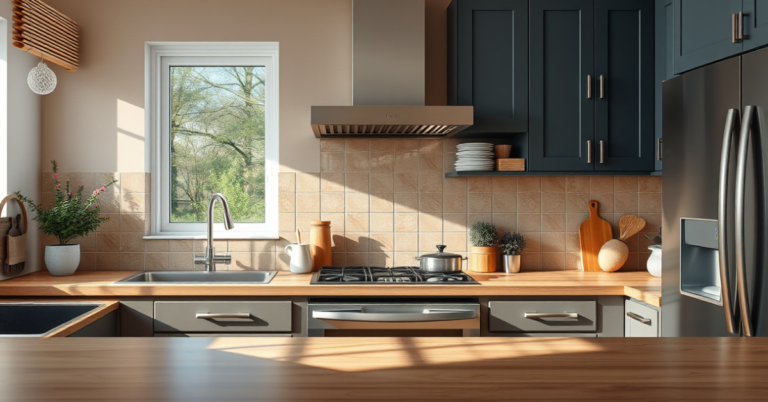
How to accessorize a kitchen counter involves balancing visual appeal with practicality. Start by selecting items that serve a purpose but also elevate the style of your space, such as attractive storage jars, a stylish cutting board, or a sleek coffee station. Incorporating a mix of textures and colors can add personality without cluttering the surface.
Making a kitchen counter both beautiful and functional helps create a space where cooking and socializing blend seamlessly. Thoughtful accessories protect the countertop from wear and add convenience, while also giving the room a personalized touch that reflects your taste and lifestyle.
This article outlines key ways to choose and arrange accessories on your kitchen counter. We’ll discuss storage solutions, decorative items, and how to organize for both efficiency and style, ensuring your countertop becomes a highlight of your kitchen rather than just a working space.
Choosing Functional Accessories for Your Kitchen Counter
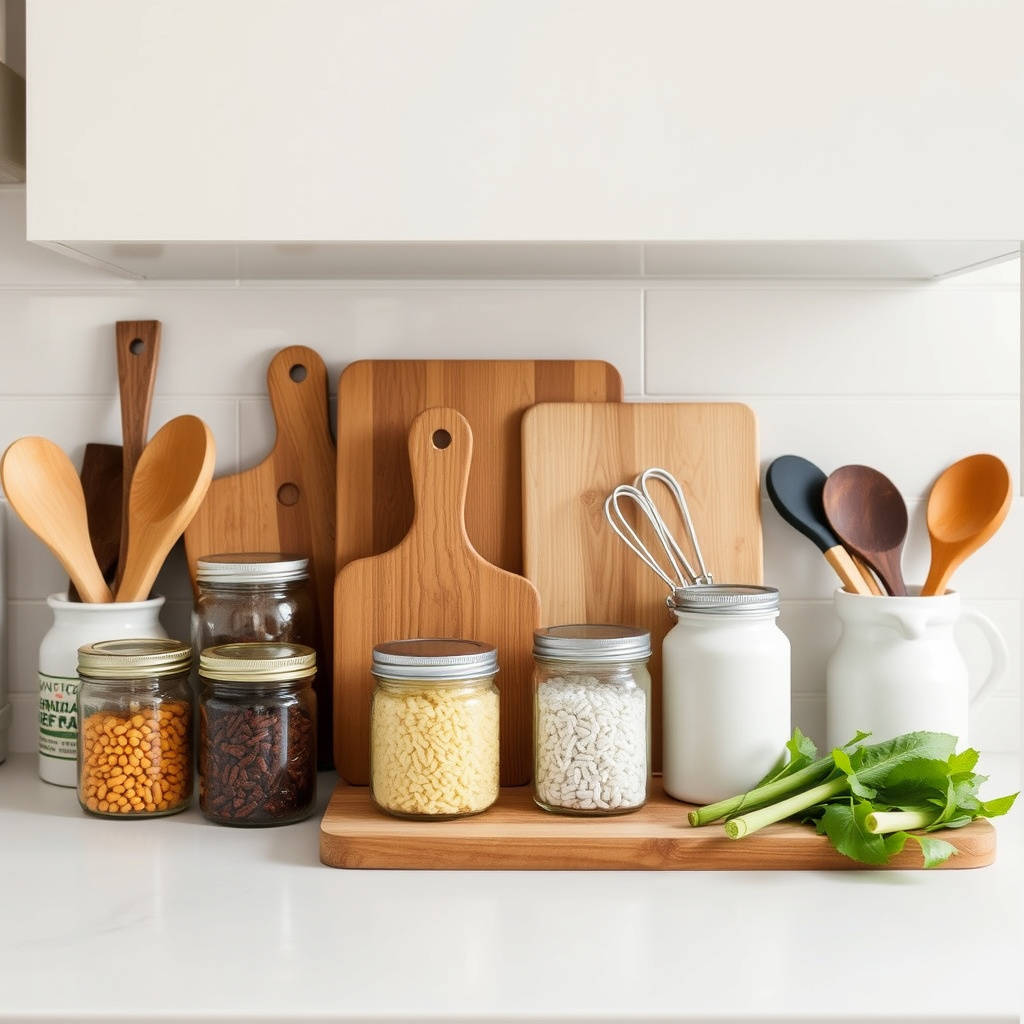
Smart Storage Containers
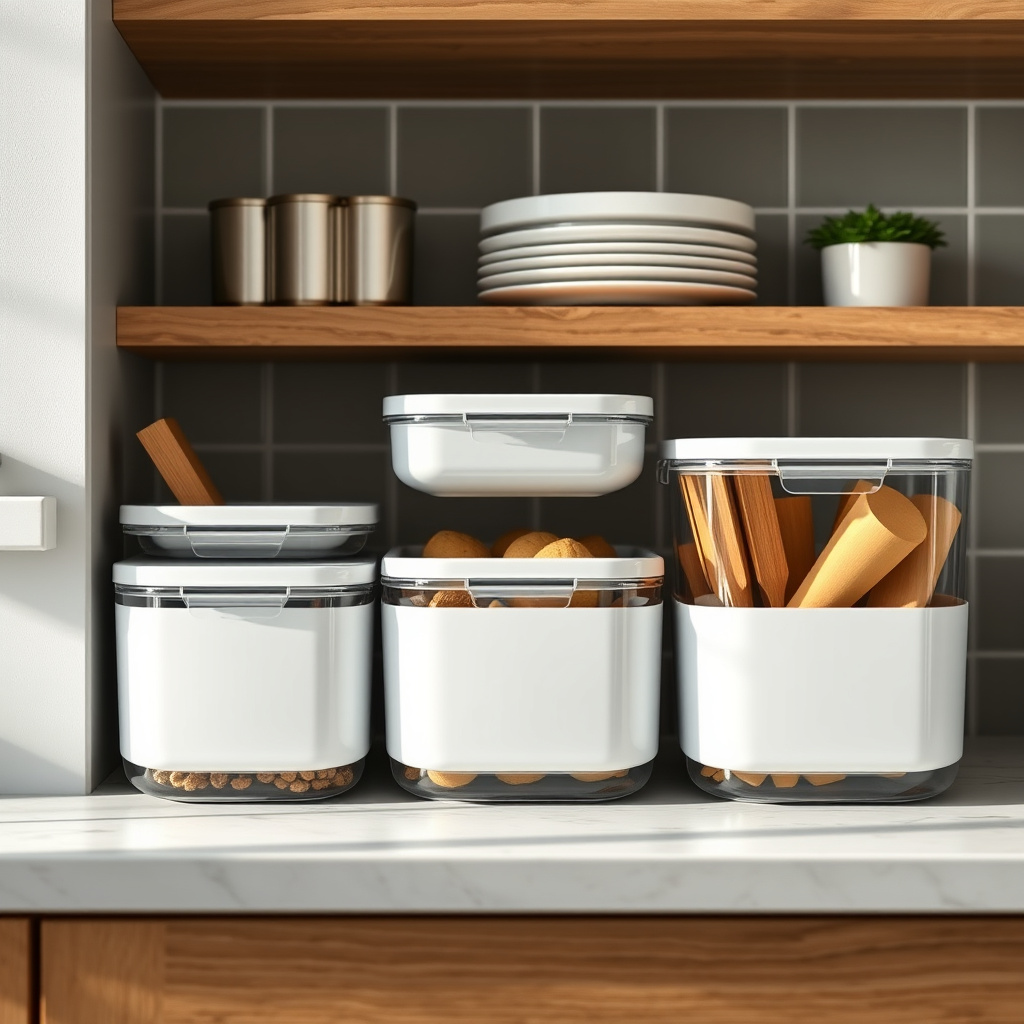
Opt for storage containers that keep frequently used ingredients such as flour, sugar, or coffee within easy reach yet neatly contained. Clear glass or airtight canisters blend convenience with a clean look, helping maintain freshness and reducing countertop clutter.
Containers with uniform shapes facilitate stacking or grouping, maximizing available space while adding harmony to your kitchen counter's appearance.
- Airtight canisters for pantry staples
- Stackable designs to save space
- Clear materials for quick ingredient identification
Utensil Holders and Cutting Boards
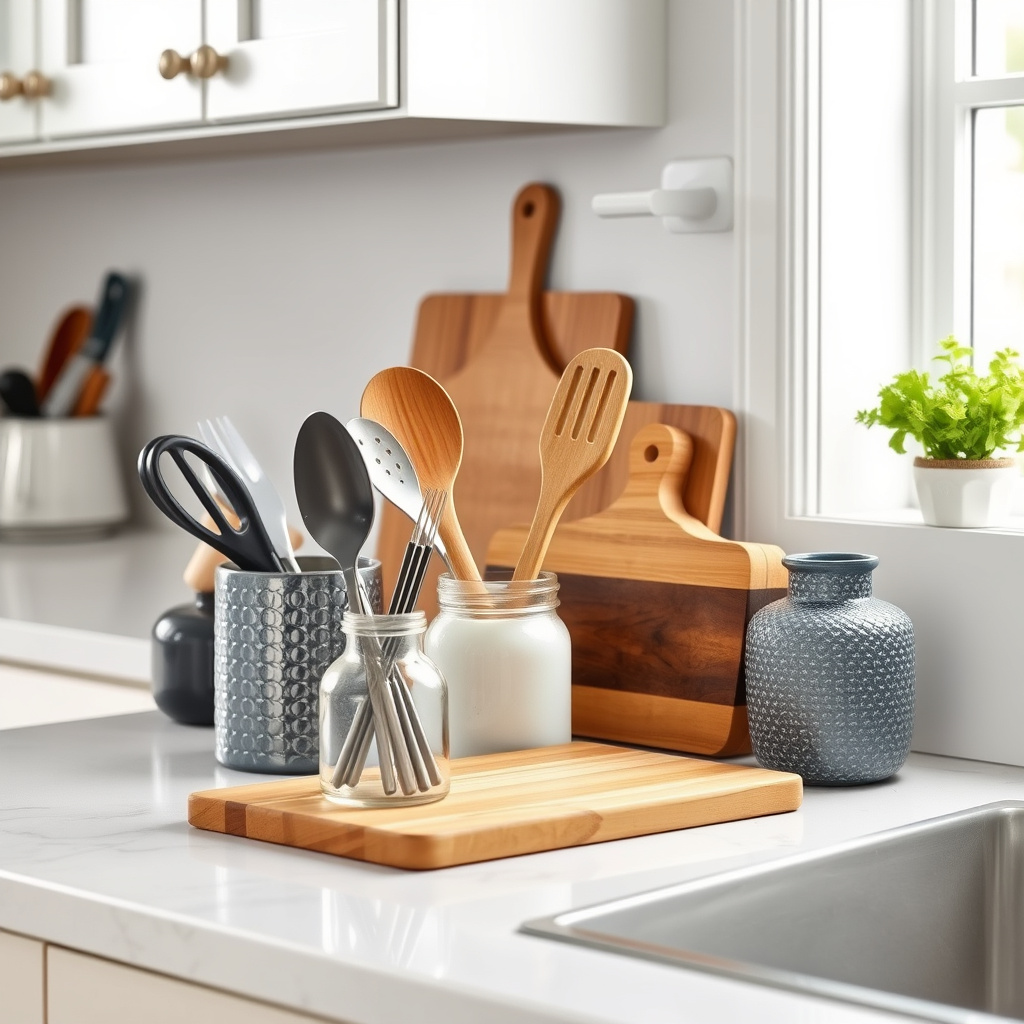
Keep your most-used cooking tools handy with an attractive utensil holder made from materials like ceramic, wood, or stainless steel. Selecting a holder that matches your kitchen’s style helps accessories blend seamlessly with decor.
A stylish cutting board, preferably wooden or bamboo, doubles as a functional tool and a decorative accessory. Positioning it upright against a backsplash can also serve as a visual focal point on the counter.
- Durable materials for utensil holders
- Multi-purpose cutting boards with aesthetic appeal
Incorporating Decorative Elements on Your Kitchen Counter
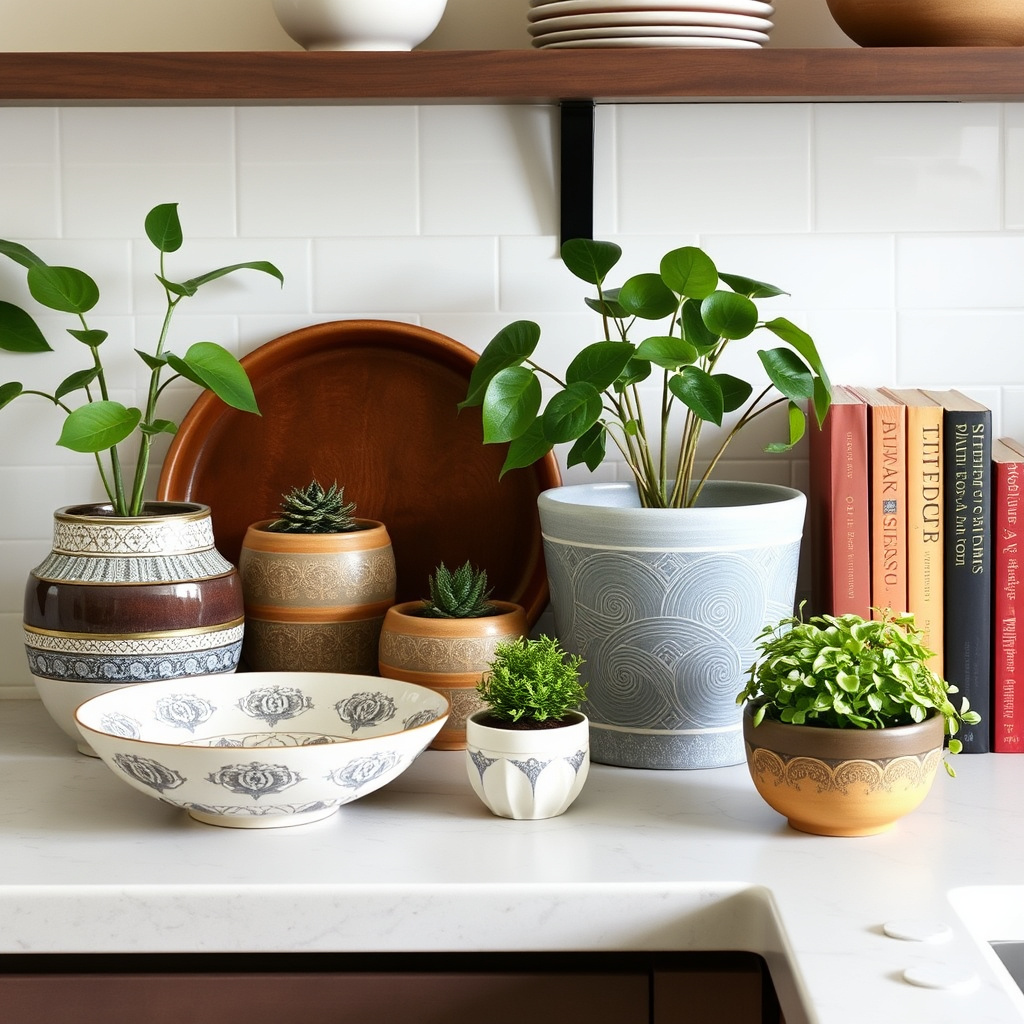
Adding Natural Touches and Greenery
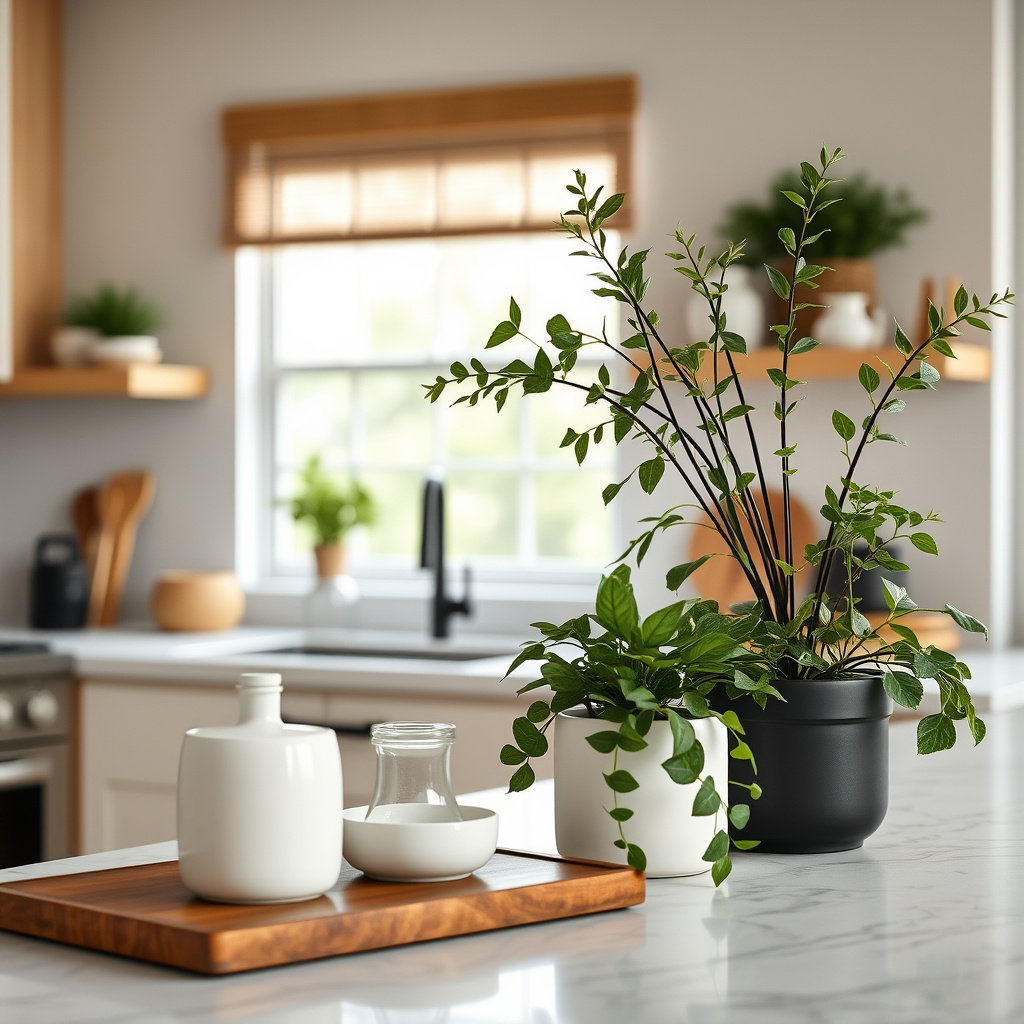
Placing small potted herbs or succulents on the countertop injects life and freshness into the kitchen environment. Besides their natural beauty, herbs provide easy access for cooking and create a subtle aromatic presence.
Select pots that complement your kitchen’s color scheme or add contrast to make greenery stand out. Elevate certain plants on stands or trays to create varied heights and more visual interest.
- Herbs in small ceramic pots
- Succulents in decorative containers
- Grouping plants for layered effect
Decorative Bowls and Books
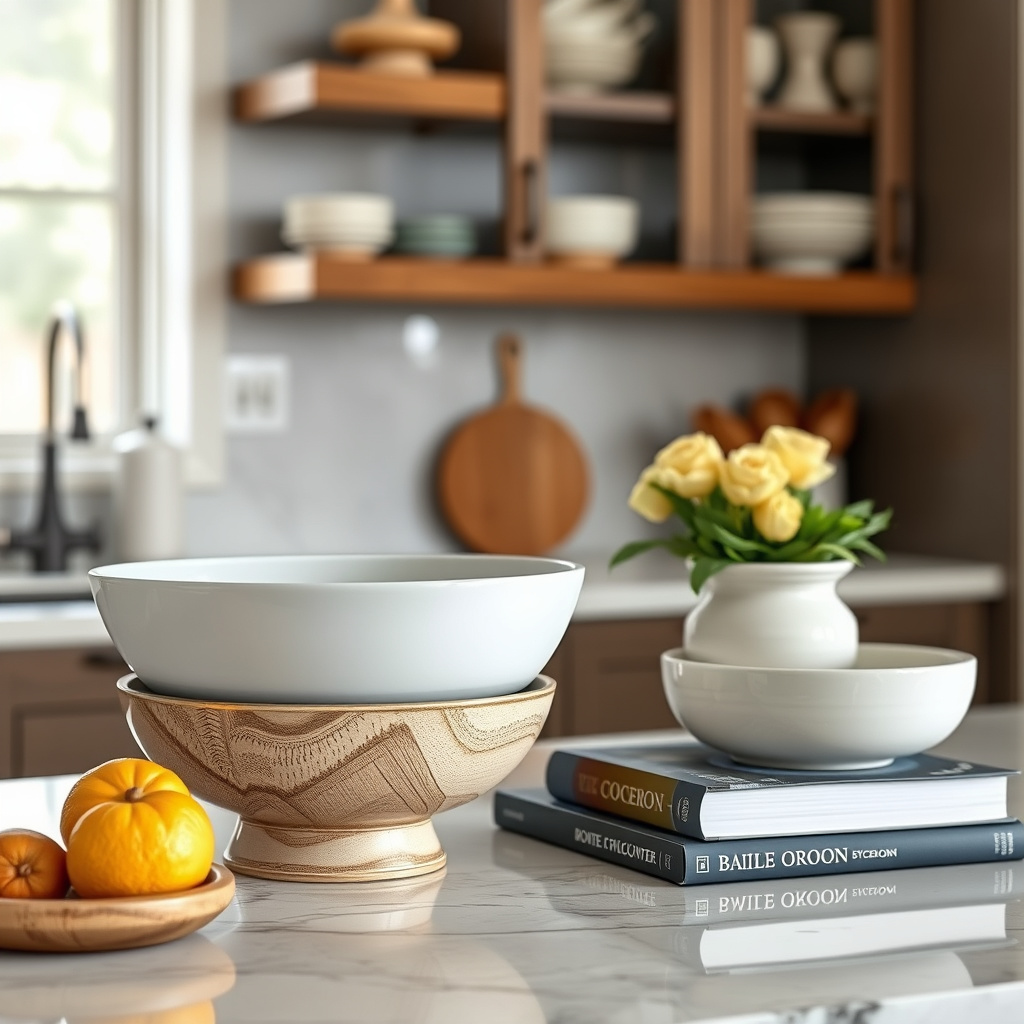
Use decorative bowls to store fresh fruit or hold keys and small items, contributing to both organization and aesthetics. Choose vibrant or textured bowls that add a pop of color or tactile contrast.
A small stack of cookbooks or recipe cards on the counter brings warmth and personality while serving as inspiration. Coordinate the cookbook covers' colors with other kitchen accessories for a polished look.
- Colorful ceramic or wooden bowls
- Neatly stacked cookbooks
- Mix of functionality and decoration
Organizing for Clarity and Ease of Use
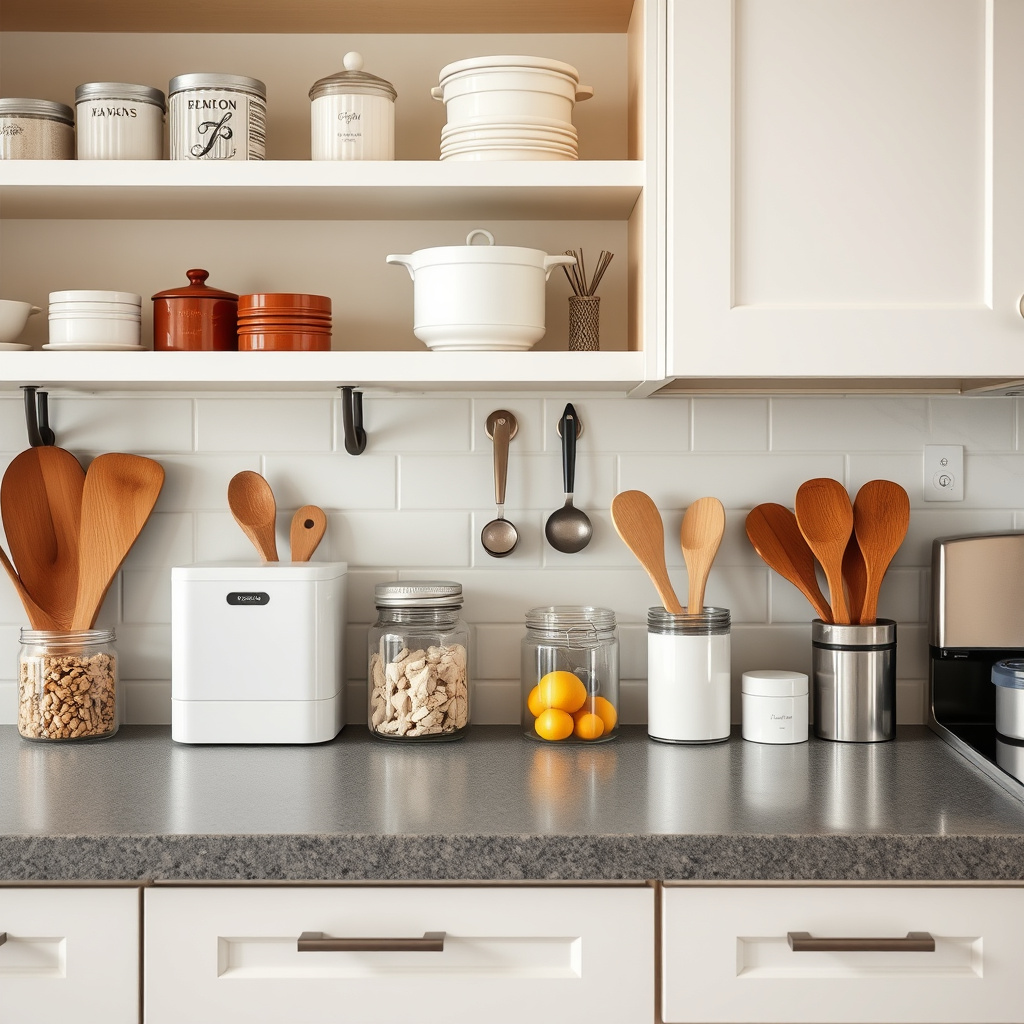
Establish Zones on Your Counter
Create specific zones such as a coffee corner, prep area, and cooking station to clarify workflow. Keeping related accessories close keeps the space intuitive and efficient during meal preparation.
Zoning prevents overcrowding one area and helps direct attention to defined purposes, making the kitchen counter feel more spacious and manageable.
- Coffee maker with mugs and sugar nearby
- Chopping board and knives in prep zone
- Oil bottles and spices near stove area
Limit Items and Rotate Accessories
Resist the temptation to display every kitchen item at once; clear counters help maintain a sense of calm and order. Rotate decorative accessories periodically to refresh your kitchen’s look without adding clutter.
Store less-frequently used items elsewhere to free up valuable counter space, keeping only essentials and preferred decor visible.
- Keep only daily essentials out
- Store seasonal or infrequently used items
- Rotate decorative accents for variety
Choosing Materials and Colors to Match Your Kitchen
Matching Materials for Cohesion
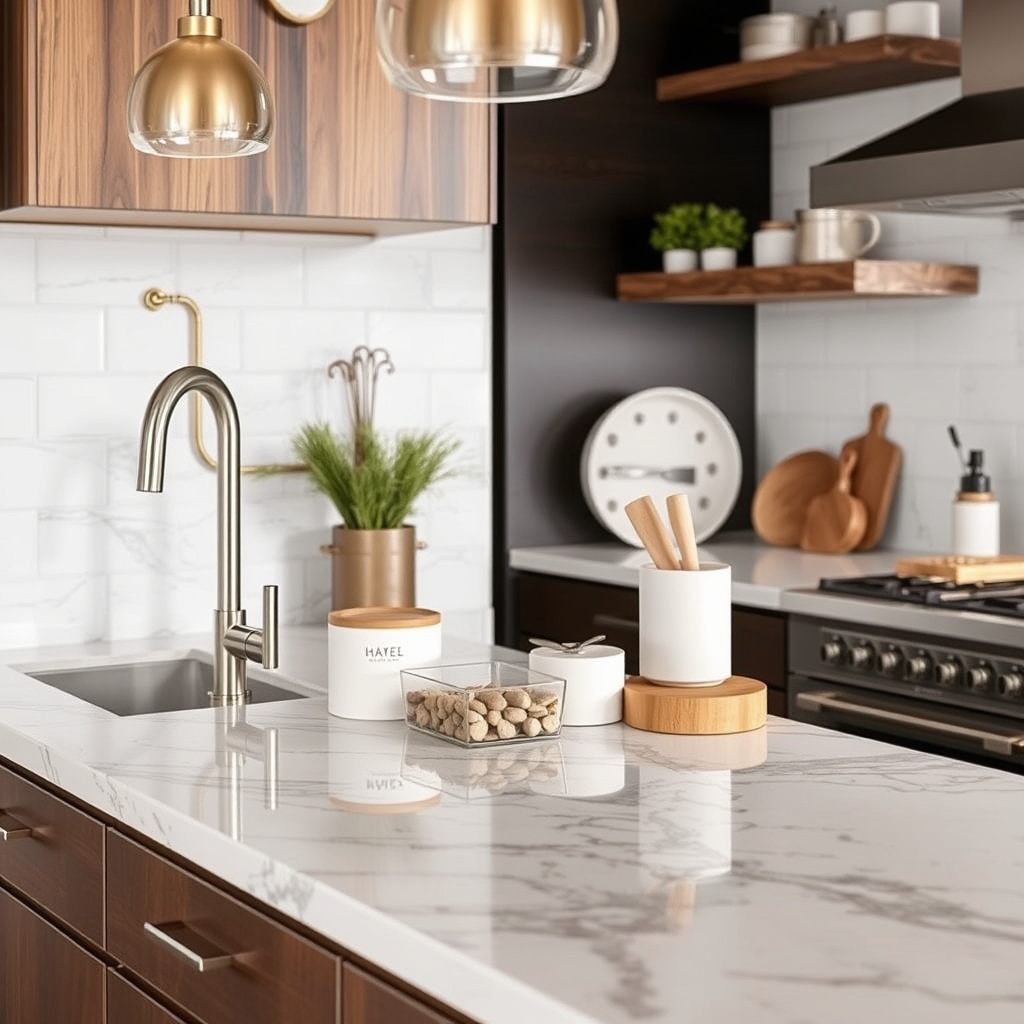
Select accessories made from materials complementing your countertop—wooden items add warmth to stone surfaces, while metals convey a modern industrial feel. This intentional choice builds a cohesive look that ties the entire kitchen together.
Mixing too many materials can result in a chaotic appearance, so aim for balance with two or three primary materials repeated across accessories.
- Wood accents for warmth
- Metal accessories for sleekness
- Ceramic items for classic charm
Coordinating Color Palettes
Choose colors for your accessories based on your kitchen’s existing palette—monochromatic or complementary shades work well to create unity. Bright accent colors can energize a neutral kitchen, while pastels soften bold countertops.
Consider how natural light interacts with your counters and accessories to avoid clashes or overly dull effects.
- Neutrals for subtle elegance
- Bold colors for energy
- Pastels for softness
Lighting and Its Effect on Kitchen Counter Accessories
Using Task Lighting for Functionality
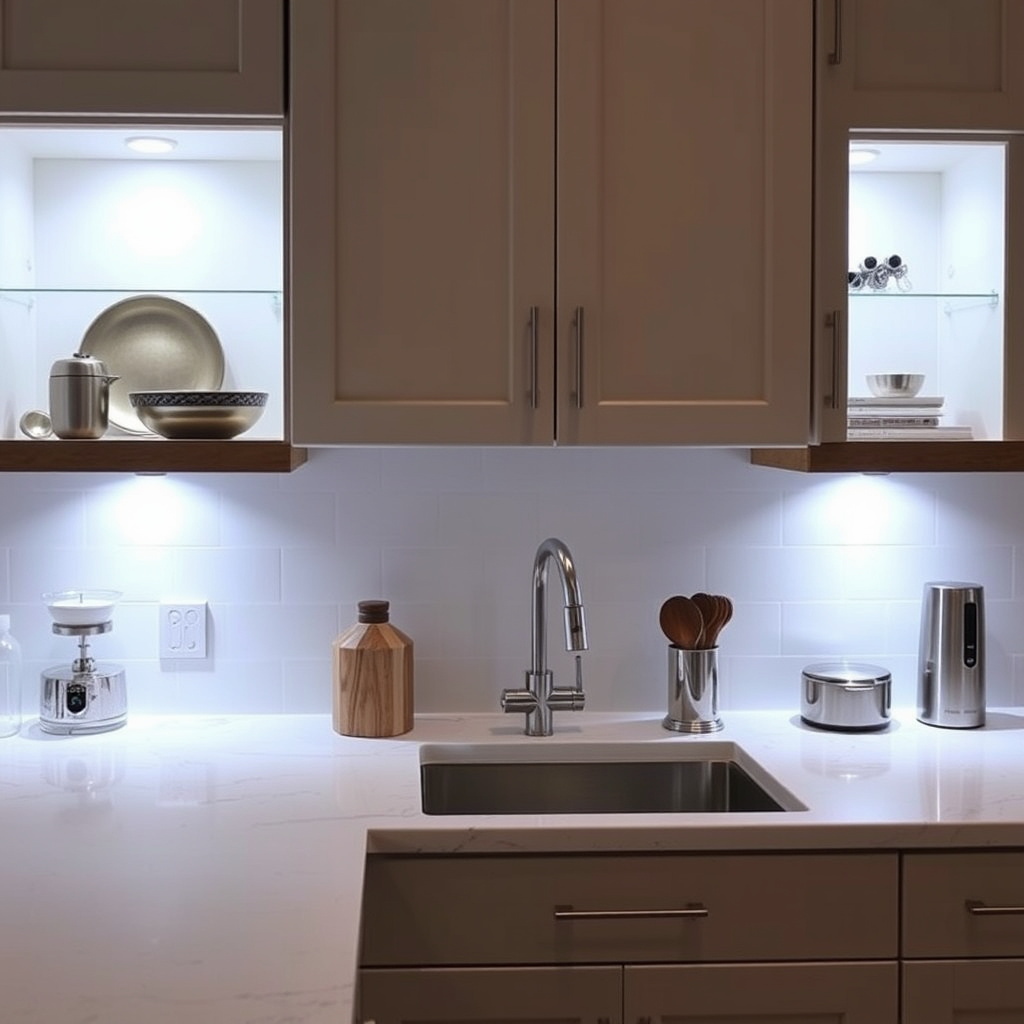
Installing under-cabinet lighting illuminates your working zones, making food prep safer and easier. Proper lighting highlights textures and shapes of accessories, enhancing their aesthetic appeal while serving a practical purpose.
LED strip lights are popular for their low heat output and customizable brightness, helping spotlight your kitchen counter accessories effectively.
- Under-cabinet LED strips
- Adjustable brightness settings
- Warm or cool light temperatures
Accent Lighting to Highlight Decor
Accent lights, such as small spotlights or pendant lamps, draw attention to decorative pieces or plants on the kitchen counter. This layered lighting approach adds mood and dimension to your kitchen space.
Position lights strategically to avoid unwanted shadows and glare that might diminish the appeal of your carefully chosen accessories.
- Pendant lighting above counter
- Small adjustable spotlights
- Light placement for shadow control
Maintaining Cleanliness and Preventing Clutter
Daily Cleaning Habits
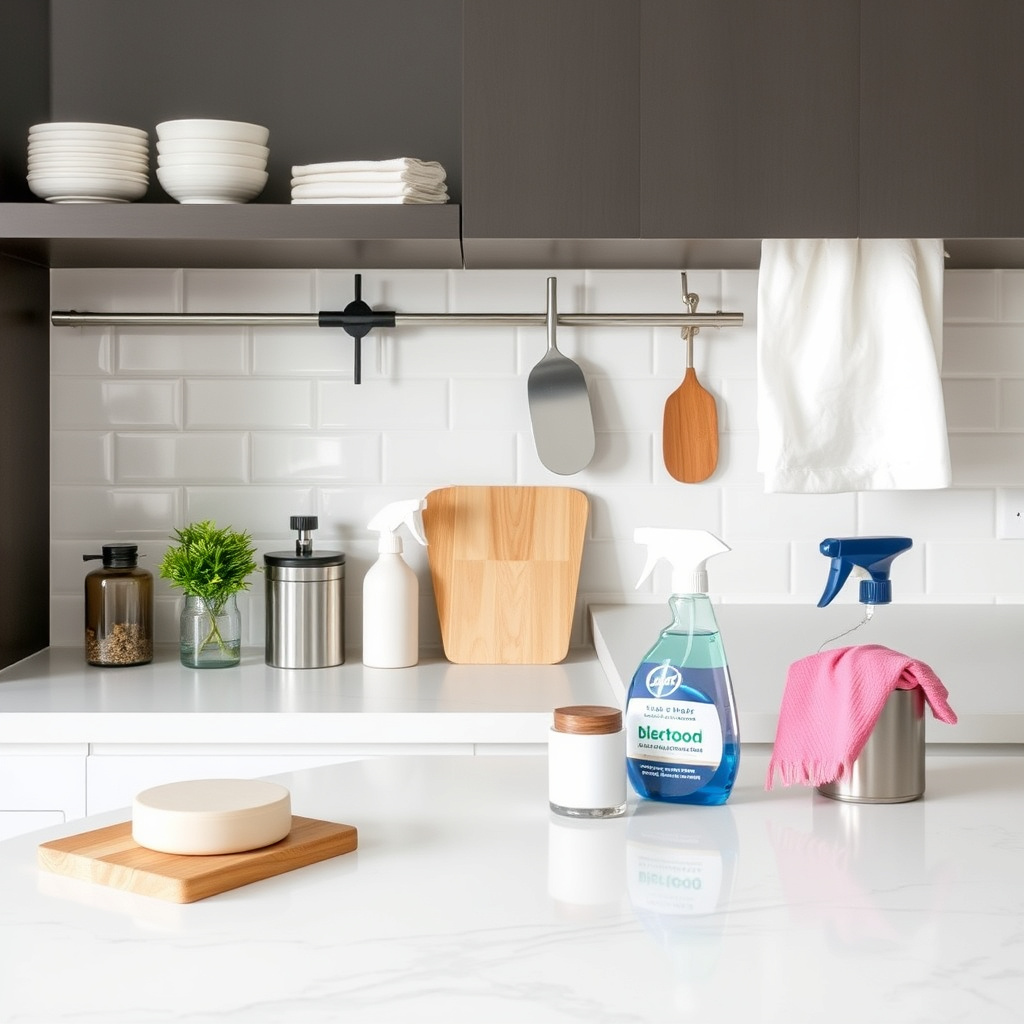
Wipe down your kitchen counter daily to keep surfaces free of crumbs, spills, and stains that detract from your accessories’ appearance. Regular cleaning prevents dirt buildup on items like utensil holders and jars.
Use appropriate cleaning solutions depending on the material of your counter and accessories to maintain their finish and longevity.
- Microfiber cloths for gentle cleaning
- Non-abrasive cleaners for delicate surfaces
- Regularly empty and clean storage containers
You can explore more about kitchen design and organization basics for improving functionality and style in your home. kitchen design and organization basics.
Avoiding Overcrowding
A visually appealing kitchen counter avoids overcrowding. When adding a new accessory, consider removing or relocating another so the counter maintains balance. Overcrowded counters not only look messy but reduce workspace.
Encourage family members to keep counters clear by providing designated storage options close by, improving overall tidiness.
- Keep surfaces for active tasks clear
- Rotate decorative elements seasonally
- Offer easy storage nearby
Kitchen Counter Accessories Category Comparison
Below is a comparison of popular kitchen counter accessory categories to help you decide which best suits your style and functional needs.
| Category | Material Options | Typical Price Range | Functionality | Visual Impact |
|---|---|---|---|---|
| Storage Canisters | Glass, Ceramic, Plastic | $15 – $50 | High – keeps ingredients fresh | Moderate – neat and clean look |
| Utensil Holders | Metal, Ceramic, Wood | $10 – $40 | High – keeps tools accessible | Varies – can add rustic or modern style |
| Plants and Herb Pots | Ceramic, Terra Cotta, Plastic | $5 – $30 | Medium – cooking and decor | High – adds natural color and life |
| Decorative Bowls | Wood, Ceramic, Glass | $20 – $60 | Medium – functional or purely decorative | High – can brighten space |
| Cutting Boards | Wood, Bamboo, Plastic | $15 – $70 | High – prep tool and decor | Moderate – natural warmth |
| Lighting Fixtures | Metal, Plastic, Glass | $40 – $150 | High – highlights accessories | High – sets mood and focus |
Frequently Asked Questions
What is the best way to keep kitchen counters clutter-free?
Limit accessories to daily essentials and rotate decorative items periodically. Clear zones for specific tasks and store unused items elsewhere to preserve workspace.
Can plants really thrive on kitchen counters?
Yes, many herbs and succulents thrive in kitchens with adequate natural light. Choose species suited to your lighting conditions and water them regularly.
How do I select accessories that match my kitchen style?
Consider your kitchen’s existing colors and materials, and choose accessories that complement or provide a tasteful contrast. Stick to a consistent material palette to avoid visual chaos.
Is under-cabinet lighting necessary for kitchen counters?
While not necessary, under-cabinet lighting greatly improves visibility for cooking tasks and enhances the appearance of countertop accessories.
How often should I clean the accessories on my kitchen counter?
Wipe down accessories and the countertop daily to prevent buildup. Deep clean items like jars and utensil holders every few weeks.
Key Takeaways
- Balance function and style when choosing kitchen counter accessories.
- Create zones to organize for efficiency and reduce clutter.
- Select materials and colors that complement your kitchen design.
- Maintain cleanliness and avoid overcrowding for a tidy look.
Conclusion
Understanding how to accessorize a kitchen counter well requires thinking about both practicality and aesthetics. Choosing functional items like storage containers and utensil holders that coordinate with decorative elements such as plants and colorful bowls creates a space where utility and beauty coexist. Organizing by zones and keeping accessories limited maintain efficiency and minimize clutter, making the kitchen counter inviting and useful. The main keyword—how to accessorize a kitchen counter—highlights the key challenge: accessorizing thoughtfully rather than randomly accumulating items.
For those aiming to refresh their kitchen counters, focusing on a few categories can simplify decisions. Functional storage canisters paired with a visually appealing cutting board and utensil holder cover daily cooking needs. Adding greenery with small potted herbs or succulents brings life, while subtle accent lighting enhances both work and decor zones. Each accessory type complements others, balancing style and use for a cohesive design tailored to your kitchen. This balanced approach also supports the secondary keyword, kitchen counter decor ideas, by blending aesthetics with utility effortlessly.
The next practical step is to evaluate your current kitchen counter space: clear non-essential items, assess lighting, and select accessories that serve areas where you spend the most time. Experiment with grouping items in small zones and adding natural touches. Regularly refreshing decor and keeping surfaces clean will sustain your kitchen’s charm. By combining function with style and paying attention to details like materials and light, you’ll create a kitchen counter that’s both a pleasure to use and a highlight in your home.